
No products in the cart.
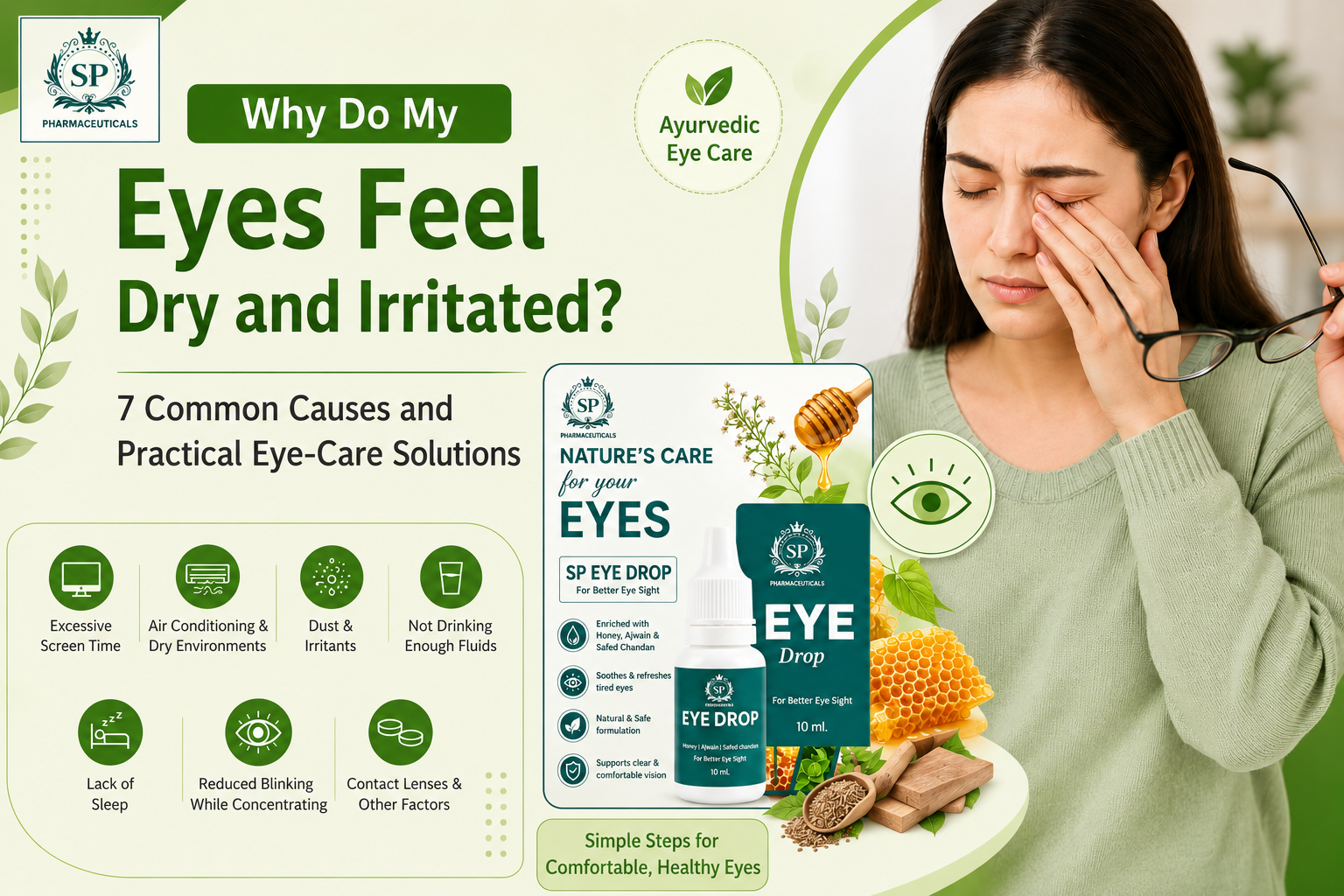
Why Do My Eyes Feel Dry and Irritated? 7 Common Causes and Practical Eye-Care Solutions
Dry, tired, or irritated eyes can be uncomfortable and distracting, especially when you spend long hours looking at screens, work in air-conditioned environments, or are exposed to dust and pollution. Occasional eye dryness may be linked to everyday habits and environmental factors, but persistent or severe symptoms should not be ignored.
Understanding the common causes of dry and irritated eyes can help you make better choices about your daily eye-care routine. From taking regular screen breaks to maintaining good hydration and using suitable eye drops for dry eyes when appropriate, simple steps can help support everyday eye comfort.
In this article, we explore seven common causes of dry and irritated eyes, practical eye-care tips, and how SP Pharmaceuticals Herbal Eye Drop can be incorporated into an everyday eye-care routine under appropriate medical guidance.
What Does Dry or Irritated Eyes Feel Like?
Dry or irritated eyes can feel different from person to person. Common symptoms may include:
| Eye Dryness | Grittiness | Screen Discomfort | Burning |
| Eye Strain | Foreign Body | Watery Eyes | Eye Sensitivity |
These symptoms can sometimes occur temporarily after a long day or exposure to an irritating environment.
7 Common Causes of Dry and Irritated Eyes
1. Excessive Screen Time
Smartphones, computers, tablets, and other digital devices are now part of everyday life. Spending extended periods looking at a screen can contribute to digital eye strain.
When concentrating on a screen, people often blink less frequently. Reduced blinking can affect the normal distribution of tears across the surface of the eyes, potentially contributing to dryness and discomfort.
What can help?
Follow the 20-20-20 approach: every 20 minutes, look at something approximately 20 feet away for around 20 seconds. Taking regular breaks and adjusting your screen position and brightness may also make screen use more comfortable.
2. Air Conditioning and Dry Environments
Air conditioners, heaters, fans, and low-humidity environments can increase moisture loss from the surface of the eyes.
If you spend many hours in an air-conditioned office or room, you may notice increased eye dryness or irritation, particularly toward the end of the day.
What can help?
Avoid directing air vents or fans directly toward your face. Maintaining a comfortable indoor environment and taking regular breaks from dry air may help reduce everyday eye discomfort.
3. Dust and Environmental Irritants
Dust, smoke, pollution, wind, and other environmental irritants can make your eyes feel uncomfortable. People who regularly travel outdoors or live in areas with high levels of dust and pollution may experience eye irritation relief more frequently.
What can help?
Protect your eyes from excessive exposure where possible. Sunglasses or protective eyewear can provide a physical barrier against wind and airborne particles when outdoors.
Avoid rubbing your eyes, as rubbing can further irritate the delicate tissues around them.
4. Not Drinking Enough Fluids
Adequate hydration is an important part of overall health and can also support normal tear production and eye comfort.
When you do not drink enough fluids throughout the day, you may experience general dryness, which can contribute to discomfort.
What can help?
Make water a regular part of your daily routine and increase your fluid intake appropriately during hot weather or periods of increased activity.
5. Lack of Sleep
Your eyes also need adequate rest. Insufficient sleep can leave your eyes feeling tired, heavy, dry, or strained.
Long working hours combined with late-night screen use may make these symptoms more noticeable.
What can help?
Maintain a consistent sleep schedule and give your eyes regular breaks from digital devices, especially before bedtime.
6. Reduced Blinking While Concentrating
Blinking helps spread the tear film across the surface of the eyes. However, when reading, driving, working on a computer, or concentrating on a task, you may naturally blink less often.
Reduced blinking over extended periods can contribute to dry or irritated eyes.
What can help?
Consciously blink more frequently during prolonged screen or close-up work. Taking short visual breaks can also help your eyes relax.
7. Contact Lenses and Other Environmental Factors
Contact lenses can contribute to eye discomfort or dryness in some people, particularly when worn for extended periods or in dry environments.
Other factors, including wind, smoke, seasonal conditions, and certain personal-care products, can also affect eye comfort.
What can help?
Follow your eye-care professional’s instructions for contact-lens use and replacement. Never sleep in contact lenses unless specifically advised to do so by a qualified professional.
If wearing lenses repeatedly causes irritation or discomfort, speak with an eye-care professional.
What Can You Do to Relieve Everyday Eye Discomfort?
A few simple habits can support everyday dry eye care:
- Take regular breaks from screens.
- Follow the 20-20-20 rule during prolonged screen use.
- Blink regularly when concentrating.
- Stay adequately hydrated.
- Get sufficient sleep.
- Avoid rubbing your eyes.
- Limit exposure to dust, smoke, and other irritants.
- Avoid directing fans or air-conditioning vents toward your eyes.
- Wear suitable protective eyewear outdoors when needed.
- Maintain good eye hygiene.
- Use appropriate eye-care products according to their directions and professional advice.
If your symptoms continue despite these measures, an eye examination can help identify the underlying cause.
When Can Eye Drops Be Considered?
Eye drops for dry eyes may help support relief from everyday dryness, irritation, and eye discomfort. SP Pharmaceuticals Herbal Eye Drop is an Ayurvedic formulation with traditional herbs and natural ingredients that helps soothe and refresh tired eyes. Use as directed or under medical supervision.
How to Use Eye Drops Correctly
Using eye drops correctly helps maintain good hygiene and reduces the risk of contamination.
Follow these general steps:
- Check the bottle and ensure it is suitable for use.
- Avoid touching the dropper tip with your fingers or allowing it to touch your eye.
- Tilt your head back and gently pull down the lower eyelid.
- Instill the recommended number of drops into the eye.
- Close your eyes gently after application.
- Close the bottle tightly after use.
For SP Pharmaceuticals Herbal Eye Drop, the stated direction is to instill 1–2 drops into each eye, or use as directed by your physician.
Always follow the instructions provided with the product.
When Should You See an Eye-Care Professional?
Occasional eye dryness or irritation may be related to everyday environmental or lifestyle factors. However, professional advice is important when symptoms are persistent, severe, or unusual.
Consult an eye-care professional if you experience:
| Persistent or worsening eye discomfort | Significant eye pain |
| Sudden changes in vision | Persistent redness |
| Unusual discharge | Significant sensitivity to light |
Do not rely on self-treatment when you have unexplained or serious eye symptoms. A qualified professional can determine the underlying cause and recommend appropriate treatment.
SP PHARMACEUTICALS EYE DROP 10 ML (PACK OF 5)
SP Pharmaceuticals Herbal Eye Drop is an Ayurvedic proprietary formulation made with a carefully selected blend of traditional herbs and natural ingredients.
The formulation contains ingredients including Honey (Madhu), Ajwain, Safed Chandan (White Sandalwood), Tulsi, Punarnava, Daruhaldi, Neem, Haritaki, Amla, Camphor, Shigru (Moringa), Saindha Lavan, Yashad Bhasma, Sphatika Bhasma, Boric Acid, and Distilled Water.
The formulation is designed to provide a gentle cooling and soothing experience for tired eyes and support everyday eye hygiene. It may be useful for people looking to maintain eye comfort while dealing with everyday factors such as screen exposure, dust, and environmental pollutants.
Key Benefits
| Helps soothe and refresh tired, strained eyes |
| Provides a gentle cooling sensation |
| Supports comfortable vision |
| Supports everyday eye hygiene |
| Helps relieve discomfort associated with dust and environmental pollutants |
| Helps keep the eyes feeling refreshed |
| Suitable for regular use under medical supervision |
Ayurvedic Ingredients
SP Pharmaceuticals Herbal Eye Drop contains a blend of traditional Ayurvedic ingredients, including:
| ✔ Honey (Madhu) | ✔ Tulsi (Ocimum sanctum) | ✔ Ajwain | ✔ Safed Chandan (White Sandalwood) |
| ✔ Punarnava | ✔ Daruhaldi | ✔ Neem | ✔ Yashad Bhasma |
| ✔ Haritaki | ✔ Amla | ✔ Saindha Lavan | ✔ Sphatika Bhasma |
| ✔ Boric Acid | ✔ Camphor | ✔ Shigru (Moringa) | ✔ Distilled Water |
These ingredients have traditionally been valued in Ayurveda for their cooling, cleansing, soothing, and eye-supporting properties.
Why Choose SP Pharmaceuticals Herbal Eye Drop?
- Ayurvedic proprietary formulation
- Made with a carefully selected blend of traditional ingredients
- Cooling and soothing effect for everyday eye comfort
- Hygienically manufactured under quality standards
- Easy-to-use dropper bottle
- Convenient 10 ml pack
- Available as a pack of 5
Directions for Use
Instill 1–2 drops into each eye, or use as directed by your physician.
Always follow the product label and your physician’s instructions regarding frequency and duration of use.
Storage Instructions
- Store in a cool, dry place.
- Keep away from direct sunlight.
- Close the bottle tightly after each use.
- Keep out of reach of children.
- Follow the product label for any additional storage instructions.
Frequently Asked Questions
Dry eyes can be associated with several everyday factors, including prolonged screen use, reduced blinking, dry indoor air, dust, wind, dehydration, lack of sleep, and contact-lens use. Certain medications and underlying eye conditions can also contribute to dryness.
Yes. Prolonged screen use can contribute to digital eye strain because people often blink less while concentrating on a screen. Taking regular breaks, blinking frequently, and following the 20-20-20 rule can help support eye comfort
The appropriate frequency depends on the specific eye-drop formulation and the individual’s needs. For SP Pharmaceuticals Herbal Eye Drop, use 1–2 drops in each eye or as directed by your physician. Always follow the product label and professional medical advice.
Store the eye drops in a cool, dry place away from direct sunlight. Keep the bottle tightly closed after each use and keep it out of reach of children. Always check the product packaging for specific storage requirements.
You should seek professional eye care tips for, if irritation is persistent, severe, worsening, or accompanied by significant pain, sudden vision changes, persistent redness, unusual discharge, substantial light sensitivity, or an eye injury.
Final Thoughts
Dry and irritated eyes can often be linked to everyday habits and environmental conditions such as prolonged screen time, dry air, dust, dehydration, and insufficient rest. Making small changes to your daily routine can help manage digital eye strain and support better eye care and everyday comfort.
For people looking for an Ayurvedic option, SP Pharmaceuticals Herbal Eye Drop 10 ml (Pack of 5) contains a blend of traditional ingredients designed to soothe and refresh tired eyes. It may be considered as part of an eye-care routine for those looking for eye drops for irritated eyes and everyday eye irritation relief.